+971 43 38 3155
 info@moltents.com
 Al Quoz Industrial Area 03, Dubai, UAE

Benefits of Thermography for Testing and Commissioning
Blog
February 23, 2026
Share 


Thermography in Testing and Commissioning
In today’s complex electrical and mechanical environments, precision during testing and commissioning is critical. Whether it’s a new installation or a system upgrade, ensuring every component performs safely and efficiently before handover can prevent costly failures later. One of the most reliable and non-invasive tools used in this phase is thermography.
At MOLTEN, thermographic testing plays a vital role in delivering dependable, high-performance systems across commercial and industrial projects.
What is Thermography?
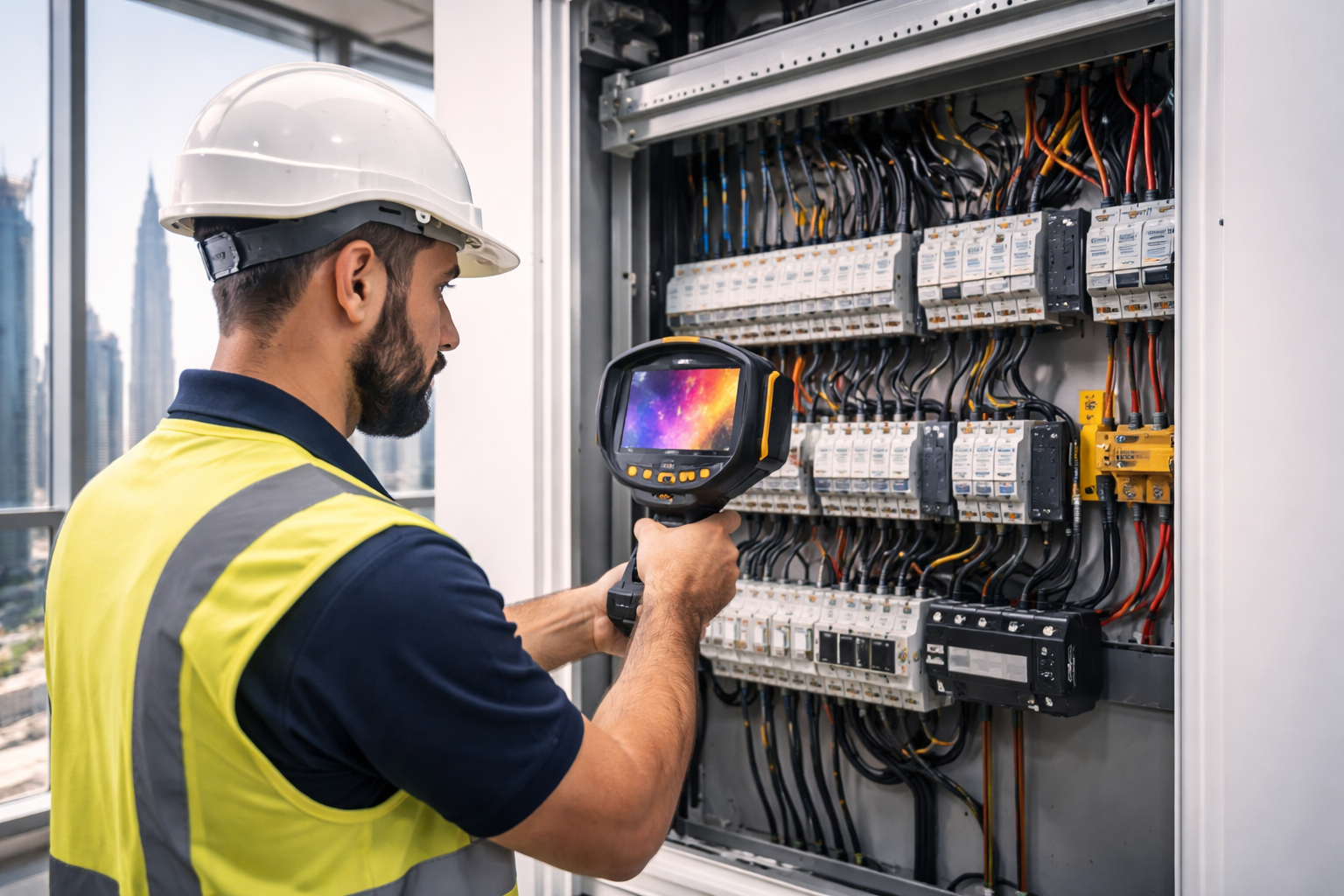
Thermography is the process of using infrared cameras to detect temperature variations on the surface of equipment and systems. Since excessive heat is often the first sign of an underlying issue, thermal imaging allows engineers to identify faults that are invisible to the naked eye—without shutting down operations.
1. Early Detection of Electrical Faults
During testing and commissioning, thermography helps detect loose connections, overloaded circuits, phase imbalances, and faulty components in electrical panels, switchgear, transformers, and cable terminations.
Heat anomalies typically indicate resistance or stress within the system. Identifying these issues before full-scale operation ensures reliability and significantly reduces the risk of breakdowns, short circuits, or fire hazards.
2. Non-Invasive and Safe Inspection
One of the biggest advantages of thermography is that it is completely non-contact. Equipment can be inspected while energized and under load, which provides real-time performance data without interrupting operations.
This approach enhances safety for technicians and avoids the downtime that traditional inspection methods may require.
3. Improved System Reliability
Commissioning is not just about verifying that systems are installed—it’s about confirming they perform optimally under actual working conditions. Thermal imaging validates the integrity of electrical connections and load distribution, ensuring the system is stable and balanced before project handover.
By addressing thermal irregularities early, organizations can avoid premature equipment failure and ensure long-term operational reliability.
4. Cost Savings Through Preventive Action
Unidentified heat buildup can lead to insulation damage, equipment degradation, and unexpected shutdowns. Thermographic testing allows teams to correct minor issues before they escalate into expensive repairs or replacements.
Investing in thermal inspections during commissioning reduces future maintenance costs and protects critical assets.
5. Comprehensive Documentation and Reporting
Thermographic scans generate detailed visual reports with temperature readings and thermal patterns. These reports become part of the commissioning documentation, providing clients with clear evidence that systems were thoroughly tested and verified.
This documentation is particularly valuable for compliance, audits, insurance requirements, and long-term maintenance planning.
6. Faster Commissioning Process
Because thermography allows quick scanning of large areas and multiple components, it accelerates the inspection process. Engineers can efficiently assess panels, busbars, terminations, and mechanical systems without dismantling equipment.
This streamlined approach helps projects stay on schedule while maintaining high quality standards.
Why Choose MOLTEN for Thermographic Testing?
At MOLTEN, thermographic inspections are conducted by trained professionals using advanced infrared technology. Every inspection is backed by systematic analysis and clear reporting, ensuring clients receive accurate diagnostics and actionable insights.
By integrating thermography into testing and commissioning, MOLTEN ensures safety, efficiency, and long-term performance—right from day one.
Thermal imaging is not just an inspection method; it is a proactive strategy for delivering reliable, future-ready systems.
.png) BACK TO ALL POSTS
BACK TO ALL POSTS