+971 43 38 3155
 info@moltents.com
 Al Quoz Industrial Area 03, Dubai, UAE

How Smart HVAC Design Saves Up to 30% Energy in Commercial Buildings
Uncategorized
November 16, 2025
Share 


In today’s commercial environments, energy efficiency is no longer optional — it’s a strategic priority. With rising energy costs and sustainability goals shaping modern infrastructure, organizations are turning to smart HVAC design to optimize performance while reducing operational expenses. A well-engineered HVAC system can save up to 30% energy in commercial buildings, creating comfortable indoor environments with lower carbon impact and long-term cost benefits.
At MOLTEN, our engineering-first approach places smart planning, precise load calculations, and innovative technology integration at the core of every HVAC solution.
1. Right-Sizing Through Accurate Load Calculations
Many commercial buildings suffer from oversized or undersized HVAC systems. Oversized systems consume unnecessary energy and cause frequent cycling, while undersized units run continuously and underperform. Smart HVAC design begins with detailed heat load calculations considering factors such as:
- Occupancy density
- Lighting and equipment heat gain
- Building envelope thermal properties
- Orientation and climate conditions
By matching system capacity to the real load demand, energy usage can be drastically reduced and equipment lifespan extended.
2. Zoning and Variable Air Volume Systems
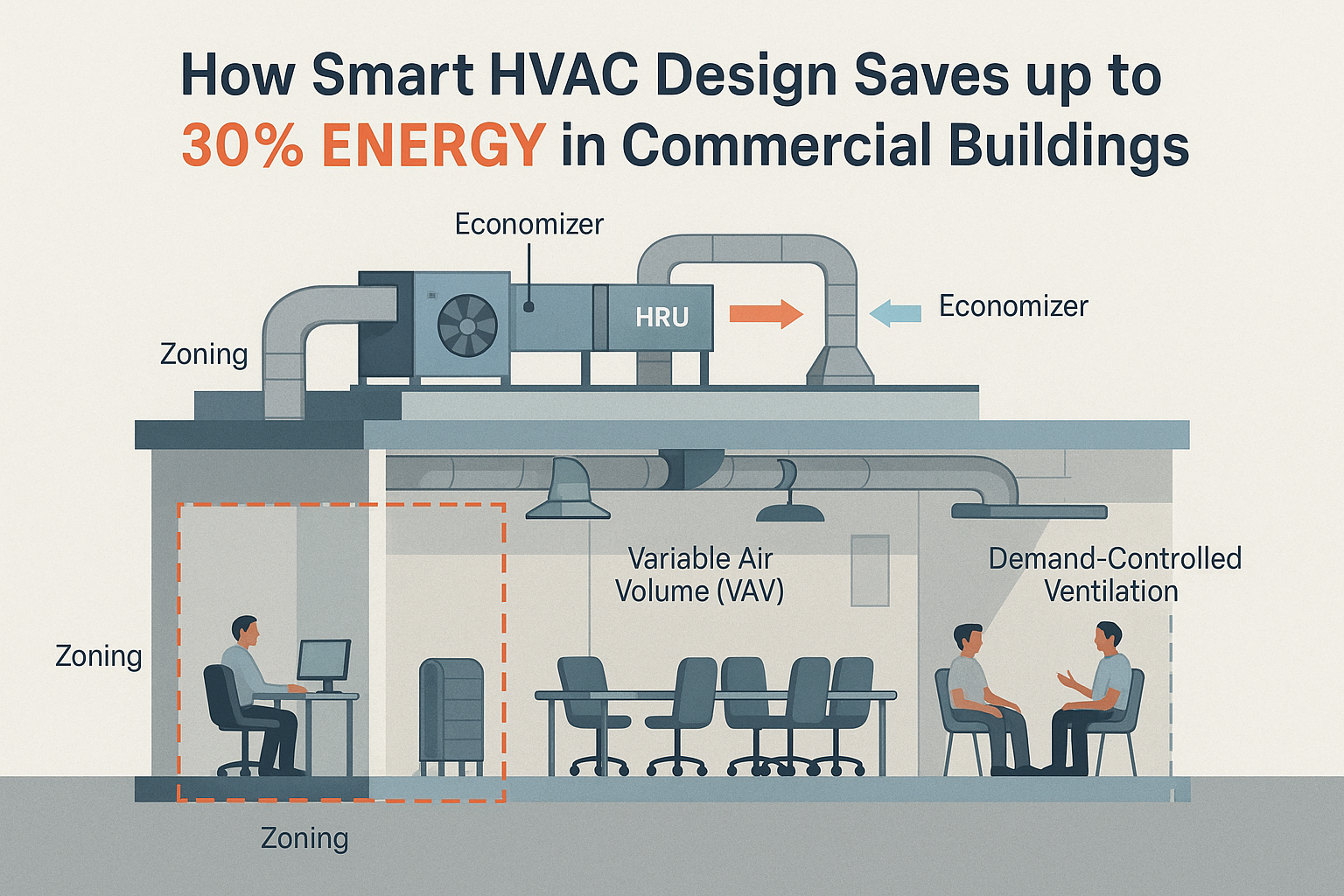
Modern commercial spaces have varied occupancy and thermal needs throughout the day. Implementing zone-based controls and Variable Air Volume (VAV) systems ensures precise temperature regulation in different zones. Instead of conditioning the entire building uniformly, VAV systems minimize airflow and cooling where demand is low.
This dynamic modulation significantly improves efficiency and reduces overall energy consumption.
3. Demand-Controlled Ventilation
Ventilating a space based on real-time occupancy is one of the most impactful energy-saving strategies. CO₂ and occupancy sensors allow HVAC systems to adjust outside air intake based on actual needs rather than fixed schedules.
Demand-controlled ventilation optimizes indoor air quality while reducing the energy required to condition fresh air — particularly valuable in large offices, shopping malls, and commercial complexes.
4. Heat Recovery and Economizer Systems
Smart HVAC design incorporates heat recovery units (HRU) and economizers to reuse waste heat and take advantage of ambient air conditions.
- HRUs transfer heat from exhaust air to fresh intake air
- Economizers bring in cool outside air when weather permits
These systems minimize compressor load, resulting in significant energy savings without compromising comfort.
5. Automation, Analytics & Smart Controls
Integrating Building Management Systems (BMS) and intelligent controls fine-tunes HVAC performance using real-time analytics. Smart sensors adjust temperature, airflow, and humidity automatically, based on building occupancy and weather patterns.
By continuously monitoring system performance, predictive maintenance and proactive tuning further enhance efficiency and reliability.
Delivering Sustainable Comfort With MOLTEN
Energy-efficient HVAC design is not just about equipment — it’s about engineering insight, precision planning, and ongoing optimization. With deep domain expertise and a commitment to sustainable engineering, MOLTEN designs smart HVAC systems that reduce energy consumption, enhance indoor comfort, and extend equipment life.
Whether you’re constructing a new commercial facility or upgrading an existing one, investing in expert HVAC design delivers measurable returns — up to 30% energy savings, lower operational costs, and a greener future.
.png) BACK TO ALL POSTS
BACK TO ALL POSTS