Category: Uncategorized

  • 5 Crucial HVAC Commissioning Tests for Reliable Commercial HVAC Performance

    5 Crucial HVAC Commissioning Tests for Reliable Commercial HVAC Performance

    In commercial buildings, HVAC systems are expected to perform flawlessly—delivering comfort, efficiency, and reliability from day one. However, even the best-designed HVAC system can underperform if it is not properly commissioned.

    HVAC commissioning is the final and most critical phase before system handover. It ensures that every component operates as intended, complies with design specifications, and meets local regulatory standards.

    Here are the five crucial HVAC commissioning tests that ensure reliable performance in commercial buildings.


    1. Airflow Measurement & Balancing Test

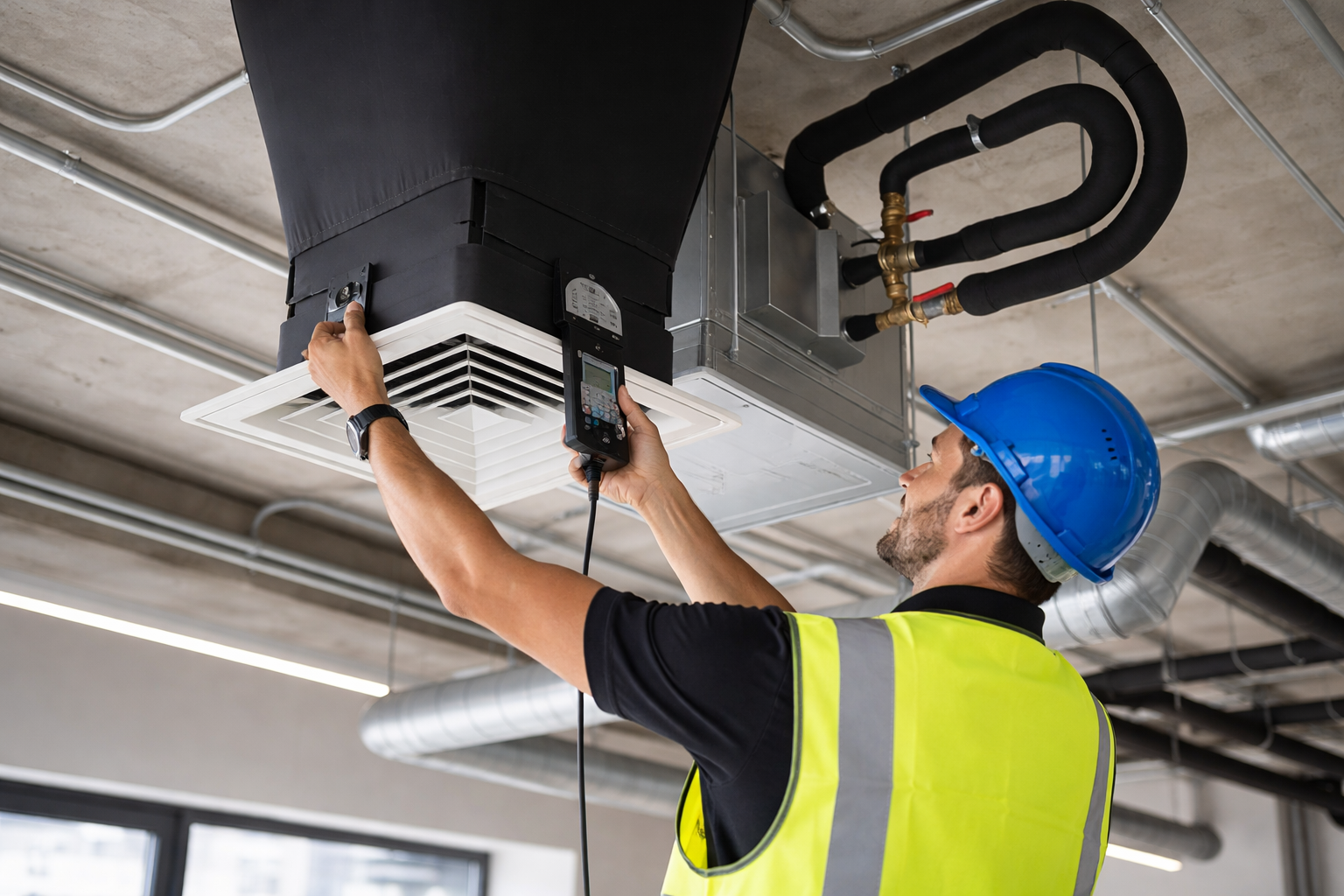
    Airflow balancing verifies that the designed air quantities are delivered to every occupied space.

    This test involves:

    • Measuring supply, return, and exhaust air volumes
    • Balancing air distribution across zones
    • Ensuring correct diffuser performance

    Proper airflow balancing prevents hot and cold spots, reduces occupant complaints, and ensures consistent comfort throughout the building. It is especially critical in offices, malls, hospitals, and hotels.

    2. Chilled Water / Refrigerant Flow Testing

    For chilled water and VRF systems, correct flow rates are essential for system efficiency.

    This commissioning test checks:

    • Chilled water flow rates across AHUs and FCUs
    • Pump performance and differential pressure
    • Correct refrigerant charge and circulation

    Incorrect flow can lead to poor cooling, excessive energy consumption, and premature equipment failure. Proper testing ensures optimal heat transfer and stable system operation.


    3. Controls & Automation System Testing

    Modern commercial HVAC systems rely heavily on automation and control logic.

    This test validates:

    • Thermostat and sensor calibration
    • BMS integration and communication
    • Sequence of operations (start-up, shutdown, alarms)
    • Occupancy-based and time-based controls

    Controls testing ensures that the HVAC system operates intelligently—optimizing energy use while maintaining occupant comfort.


    4. Indoor Air Quality (IAQ) & Ventilation Testing

    Indoor air quality is no longer optional—it is a key requirement in commercial buildings.

    IAQ commissioning includes:

    • Fresh air volume verification
    • CO₂ level checks
    • Filtration performance testing
    • Humidity control validation

    This test is especially important in regions with high humidity (India) or dusty environments (UAE). Proper ventilation testing ensures healthier indoor spaces and regulatory compliance.


    5. Performance & Functional Testing Under Load Conditions

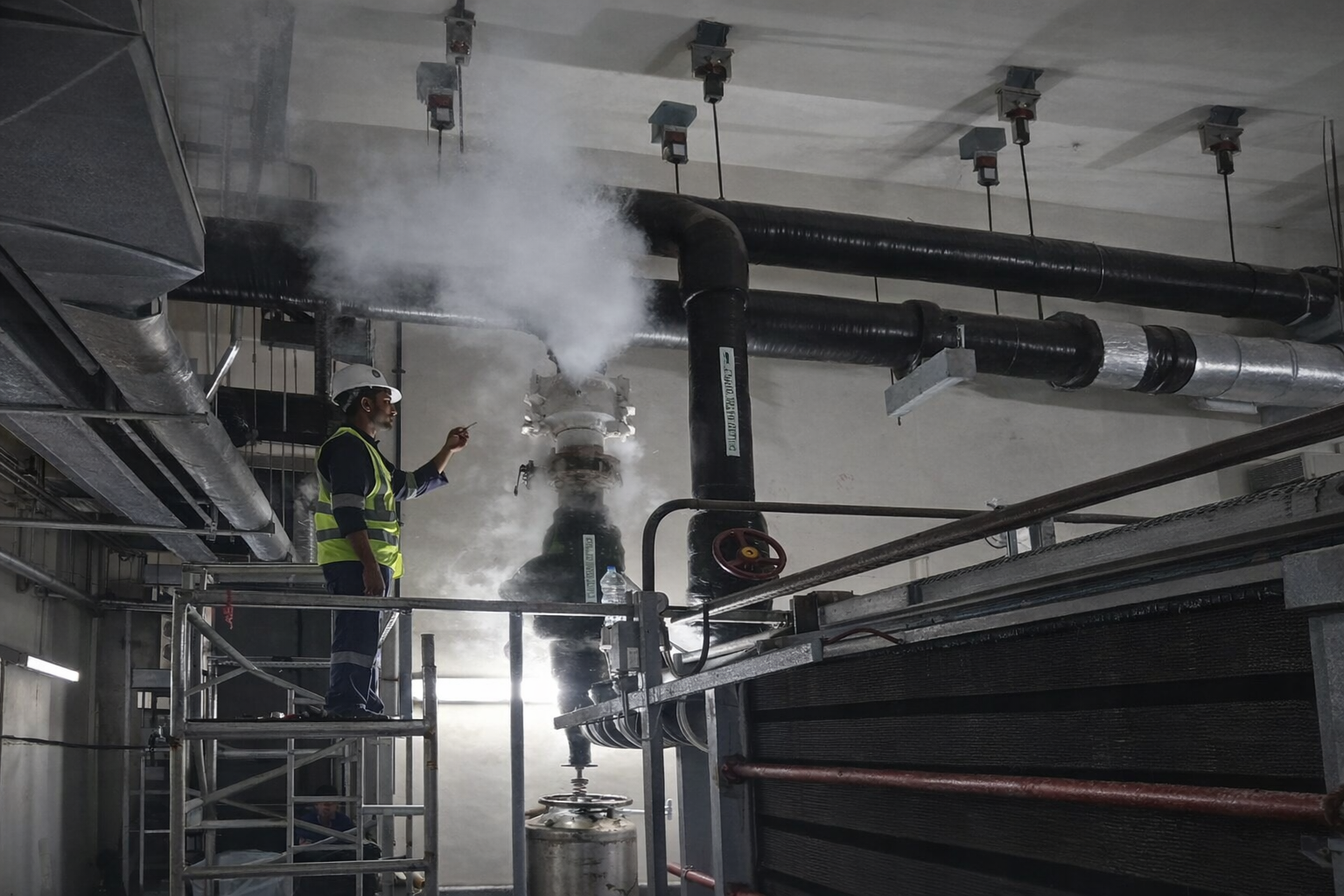
    The final commissioning step is testing the system under real operating conditions.

    This involves:

    • Running the HVAC system at partial and full loads
    • Monitoring temperatures, pressures, and energy consumption
    • Checking noise and vibration levels
    • Verifying safety interlocks and emergency shutdowns

    Performance testing confirms that the system can handle actual building demand, not just theoretical conditions.


    Why HVAC Commissioning Matters

    A properly commissioned HVAC system delivers:

    • Improved energy efficiency
    • Lower operating and maintenance costs
    • Longer equipment life
    • Reduced breakdowns and complaints
    • Compliance with local and international standards

    In commercial projects across regions, commissioning is not just a technical requirement—it is a risk management and performance assurance process.


    Conclusion

    Reliable HVAC performance does not happen by chance. It is the result of thorough commissioning, precise testing, and expert execution. By conducting these five critical HVAC commissioning tests, building owners and facility managers can ensure long-term comfort, efficiency, and system reliability.

    For commercial projects, investing in professional HVAC commissioning is not an expense—it’s a guarantee of performance.


  • How Smart HVAC Design Saves Up to 30% Energy in Commercial Buildings

    How Smart HVAC Design Saves Up to 30% Energy in Commercial Buildings

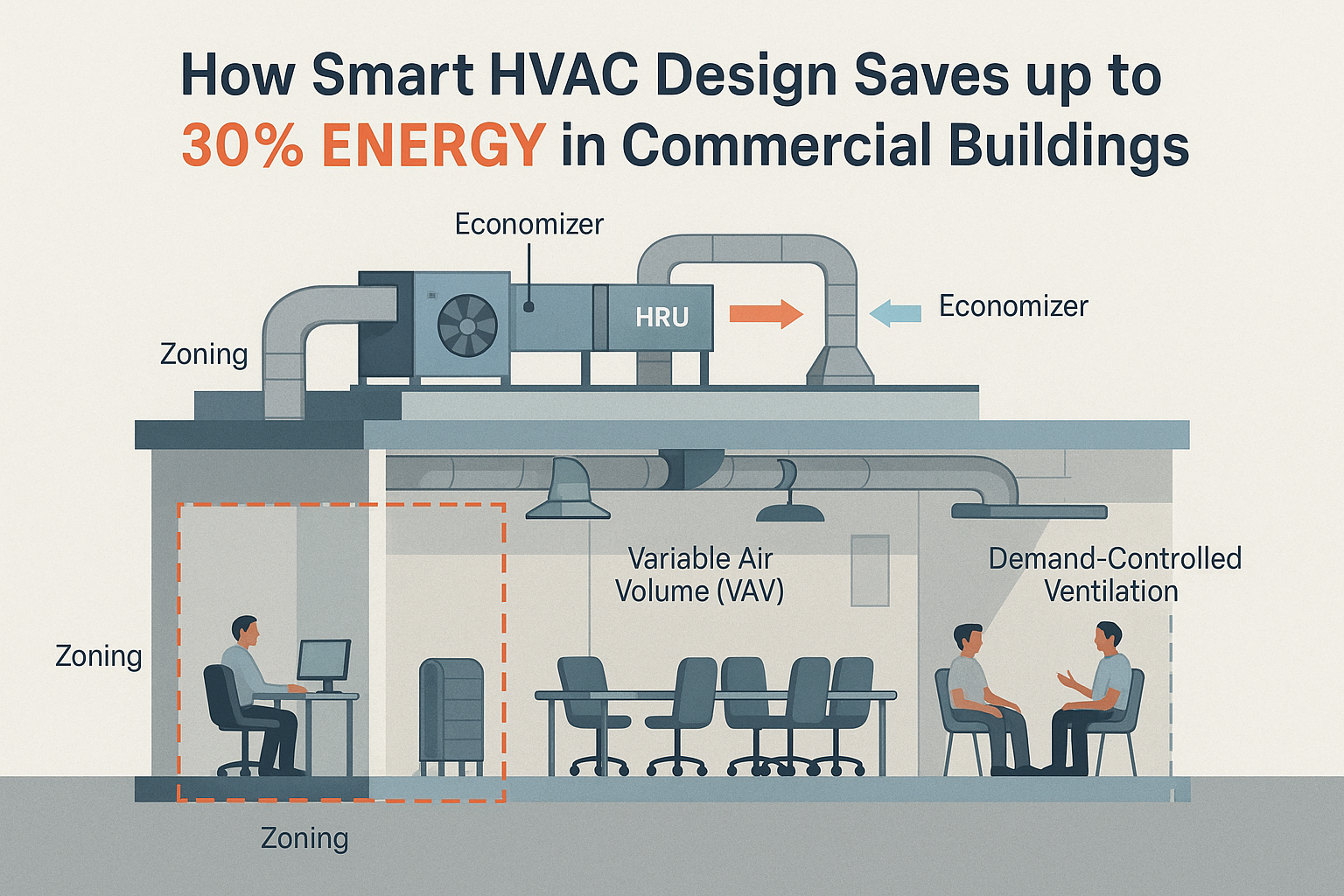
    In today’s commercial environments, energy efficiency is no longer optional — it’s a strategic priority. With rising energy costs and sustainability goals shaping modern infrastructure, organizations are turning to smart HVAC design to optimize performance while reducing operational expenses. A well-engineered HVAC system can save up to 30% energy in commercial buildings, creating comfortable indoor environments with lower carbon impact and long-term cost benefits.

    At MOLTEN, our engineering-first approach places smart planning, precise load calculations, and innovative technology integration at the core of every HVAC solution.

    1. Right-Sizing Through Accurate Load Calculations

    Many commercial buildings suffer from oversized or undersized HVAC systems. Oversized systems consume unnecessary energy and cause frequent cycling, while undersized units run continuously and underperform. Smart HVAC design begins with detailed heat load calculations considering factors such as:

    • Occupancy density
    • Lighting and equipment heat gain
    • Building envelope thermal properties
    • Orientation and climate conditions

    By matching system capacity to the real load demand, energy usage can be drastically reduced and equipment lifespan extended.

    2. Zoning and Variable Air Volume Systems

    Modern commercial spaces have varied occupancy and thermal needs throughout the day. Implementing zone-based controls and Variable Air Volume (VAV) systems ensures precise temperature regulation in different zones. Instead of conditioning the entire building uniformly, VAV systems minimize airflow and cooling where demand is low.

    This dynamic modulation significantly improves efficiency and reduces overall energy consumption.

    3. Demand-Controlled Ventilation

    Ventilating a space based on real-time occupancy is one of the most impactful energy-saving strategies. CO₂ and occupancy sensors allow HVAC systems to adjust outside air intake based on actual needs rather than fixed schedules.

    Demand-controlled ventilation optimizes indoor air quality while reducing the energy required to condition fresh air — particularly valuable in large offices, shopping malls, and commercial complexes.

    4. Heat Recovery and Economizer Systems

    Smart HVAC design incorporates heat recovery units (HRU) and economizers to reuse waste heat and take advantage of ambient air conditions.

    • HRUs transfer heat from exhaust air to fresh intake air
    • Economizers bring in cool outside air when weather permits

    These systems minimize compressor load, resulting in significant energy savings without compromising comfort.

    5. Automation, Analytics & Smart Controls

    Integrating Building Management Systems (BMS) and intelligent controls fine-tunes HVAC performance using real-time analytics. Smart sensors adjust temperature, airflow, and humidity automatically, based on building occupancy and weather patterns.

    By continuously monitoring system performance, predictive maintenance and proactive tuning further enhance efficiency and reliability.

    Delivering Sustainable Comfort With MOLTEN

    Energy-efficient HVAC design is not just about equipment — it’s about engineering insight, precision planning, and ongoing optimization. With deep domain expertise and a commitment to sustainable engineering, MOLTEN designs smart HVAC systems that reduce energy consumption, enhance indoor comfort, and extend equipment life.

    Whether you’re constructing a new commercial facility or upgrading an existing one, investing in expert HVAC design delivers measurable returns — up to 30% energy savings, lower operational costs, and a greener future.

  • The Importance of Indoor Air Pressure in HVAC Systems

    The Importance of Indoor Air Pressure in HVAC Systems

    When people think of HVAC, they usually imagine cooling, heating, or comfort. But beyond temperature control, one of the most critical—and often overlooked—factors in healthy buildings is indoor air pressure balance. The right pressure ensures that air flows in the right direction, protecting people, enhancing comfort, and improving safety.

    What is Indoor Air Pressure?

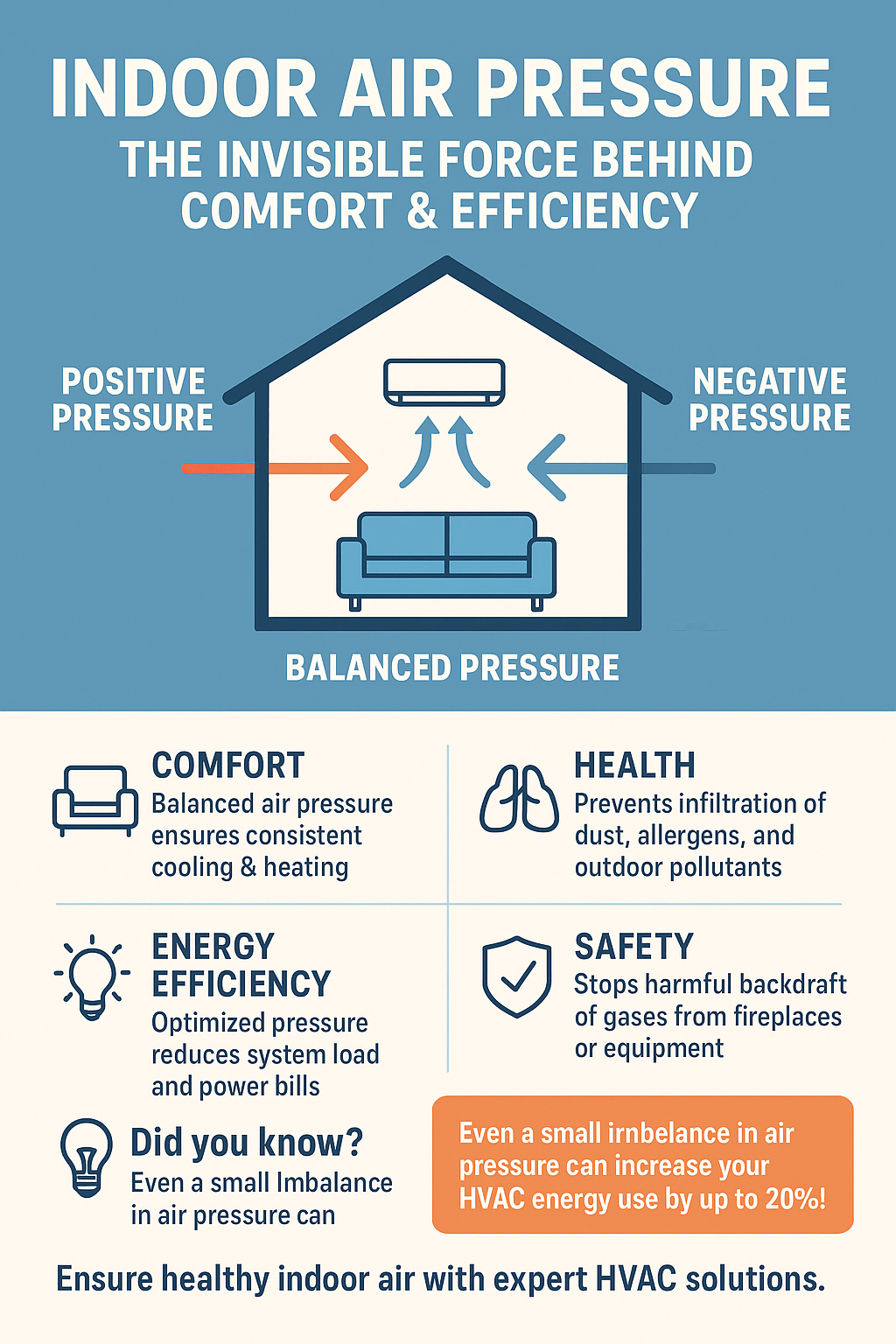
    Indoor air pressure is the result of balancing three components of an HVAC system: Treated Fresh Air (TFA), Extract Air, and Recirculated Supply Air.
    • When Supply Air > Extract Air, the space is under Positive Pressure.
    • When Extract Air > Supply Air, the space is under Negative Pressure.
    • When both are balanced, the space is in Neutral Pressure.

    This balance decides whether a room pushes air out, pulls air in, or stays stable.

    Positive Pressure

    Positive pressure means more air is supplied than exhausted. This forces clean air out of the space whenever doors or openings are accessed, preventing contaminants from entering.

    Applications:
    • Hospitals: Operating rooms, ICUs, clean rooms
    • Homes: Living rooms, bedrooms
    • Restaurants: Dining areas
    • Offices: Lobbies and workspaces

    Benefit: Protects occupants by keeping contaminants, dust, and odors out.

    Negative Pressure

    Negative pressure means more air is exhausted than supplied. This creates a suction effect, pulling surrounding air into the space. It is used to contain pollutants, odors, or infections within a defined area.

    Applications:
    • Hospitals: Isolation rooms
    • Homes: Kitchens and toilets
    • Restaurants: Kitchens
    • Industries: Paint booths, labs, and chemical areas

    Benefit: Prevents spread of odors, smoke, or infectious agents into cleaner areas.

    Neutral Pressure

    Some spaces don’t need positive or negative dominance. Neutral pressure is used in comfort-driven environments like classrooms, open-plan offices, or general retail areas, where stable air balance is sufficient.

    Everyday Examples


    • In Homes: Living rooms stay positive to remain fresh, while kitchens and toilets stay negative to stop odors and smoke from spreading.
    • In Restaurants: Dining halls are positive for guest comfort, kitchens are negative to keep cooking fumes contained.
    • In Hospitals: Operating theaters are positive to protect patients, while isolation wards are negative to contain infections.

    MOLTEN’s Commitment

    At MOLTEN, we recognize that air pressure is not just about engineering—it’s about Creating Healthy Environments. Our HVAC designs and commissioning services are built to ensure the correct pressure balance for every project, whether it’s a home, hospital, restaurant, or industrial site.

    By combining technical expertise, sustainable design, and global standards, we deliver environments that are safer, cleaner, and healthier—today and for the future.

  • The Importance of Indoor Air Pressure in HVAC Systems

    The Importance of Indoor Air Pressure in HVAC Systems

    When people think of HVAC, they usually imagine cooling, heating, or comfort. But beyond temperature control, one of the most critical—and often overlooked—factors in healthy buildings is indoor air pressure balance. The right pressure ensures that air flows in the right direction, protecting people, enhancing comfort, and improving safety.

    What is Indoor Air Pressure?

    Indoor air pressure is the result of balancing three components of an HVAC system: Treated Fresh Air (TFA), Extract Air, and Recirculated Supply Air.
    • When Supply Air > Extract Air, the space is under Positive Pressure.
    • When Extract Air > Supply Air, the space is under Negative Pressure.
    • When both are balanced, the space is in Neutral Pressure.

    This balance decides whether a room pushes air out, pulls air in, or stays stable.

    Positive Pressure

    Positive pressure means more air is supplied than exhausted. This forces clean air out of the space whenever doors or openings are accessed, preventing contaminants from entering.

    Applications:
    • Hospitals: Operating rooms, ICUs, clean rooms
    • Homes: Living rooms, bedrooms
    • Restaurants: Dining areas
    • Offices: Lobbies and workspaces

    Benefit: Protects occupants by keeping contaminants, dust, and odors out.

    Negative Pressure

    Negative pressure means more air is exhausted than supplied. This creates a suction effect, pulling surrounding air into the space. It is used to contain pollutants, odors, or infections within a defined area.

    Applications:
    • Hospitals: Isolation rooms
    • Homes: Kitchens and toilets
    • Restaurants: Kitchens
    • Industries: Paint booths, labs, and chemical areas

    Benefit: Prevents spread of odors, smoke, or infectious agents into cleaner areas.

    Neutral Pressure

    Some spaces don’t need positive or negative dominance. Neutral pressure is used in comfort-driven environments like classrooms, open-plan offices, or general retail areas, where stable air balance is sufficient.

    Everyday Examples
    • In Homes: Living rooms stay positive to remain fresh, while kitchens and toilets stay negative to stop odors and smoke from spreading.
    • In Restaurants: Dining halls are positive for guest comfort, kitchens are negative to keep cooking fumes contained.
    • In Hospitals: Operating theaters are positive to protect patients, while isolation wards are negative to contain infections.

    MOLTEN’s Commitment

    At MOLTEN, we recognize that air pressure is not just about engineering—it’s about Creating Healthy Environments. Our HVAC designs and commissioning services are built to ensure the correct pressure balance for every project, whether it’s a home, hospital, restaurant, or industrial site.

    By combining technical expertise, sustainable design, and global standards, we deliver environments that are safer, cleaner, and healthier—today and for the future.

  • Why Every Commercial Building Needs a Reliable HVAC System

    Why Every Commercial Building Needs a Reliable HVAC System

    Intro
    In today’s fast-paced business world, comfort and efficiency go hand in hand. A commercial HVAC system is no longer a luxury — it’s a backbone for productivity, customer experience, and operational sustainability. At MOLTEN, we’ve seen how the right HVAC solutions can transform workspaces into thriving environments.

    1. Comfort = Productivity


    Employees perform better in comfortable climates. Studies show that workplace temperature directly affects concentration, accuracy, and morale. A well-designed HVAC system ensures consistency, avoiding hot spots or sudden chills that disrupt workflow.

    2. Energy Efficiency Matters

    Modern HVAC systems are designed to use less energy while delivering higher output. Businesses save on energy bills, improve their green credentials, and contribute to a sustainable future. At MOLTEN, we specialize in tailoring energy-efficient solutions that reduce costs without compromising comfort.

    3. Indoor Air Quality & Health

    Air circulation, humidity control, and filtration are crucial in preventing airborne illnesses and allergies. For schools, offices, hospitals, and malls, cleaner air equals healthier occupants.

    4. Protecting Equipment & Infrastructure

    From IT servers to food storage facilities, temperature control safeguards sensitive assets. An unreliable HVAC system can mean costly damage or downtime.

    5. Custom Solutions with MOLTEN

    Every building is unique — from a boutique hotel to a high-rise office. That’s why MOLTEN provides customized HVAC planning, installation, and maintenance, ensuring that each client receives a solution designed for their exact needs.

    Conclusion

    A commercial HVAC system is an investment in comfort, efficiency, and future growth. With MOLTEN’s expertise, your business can create environments where people and performance thrive. Reach out to MOLTEN today to discuss how we can future proof your building with smarter HVAC Solutions.