Author: admin

  • Benefits of Thermography for Testing and Commissioning

    Benefits of Thermography for Testing and Commissioning

    Thermography in Testing and Commissioning

    In today’s complex electrical and mechanical environments, precision during testing and commissioning is critical. Whether it’s a new installation or a system upgrade, ensuring every component performs safely and efficiently before handover can prevent costly failures later. One of the most reliable and non-invasive tools used in this phase is thermography.

    At MOLTEN, thermographic testing plays a vital role in delivering dependable, high-performance systems across commercial and industrial projects.

    What is Thermography?

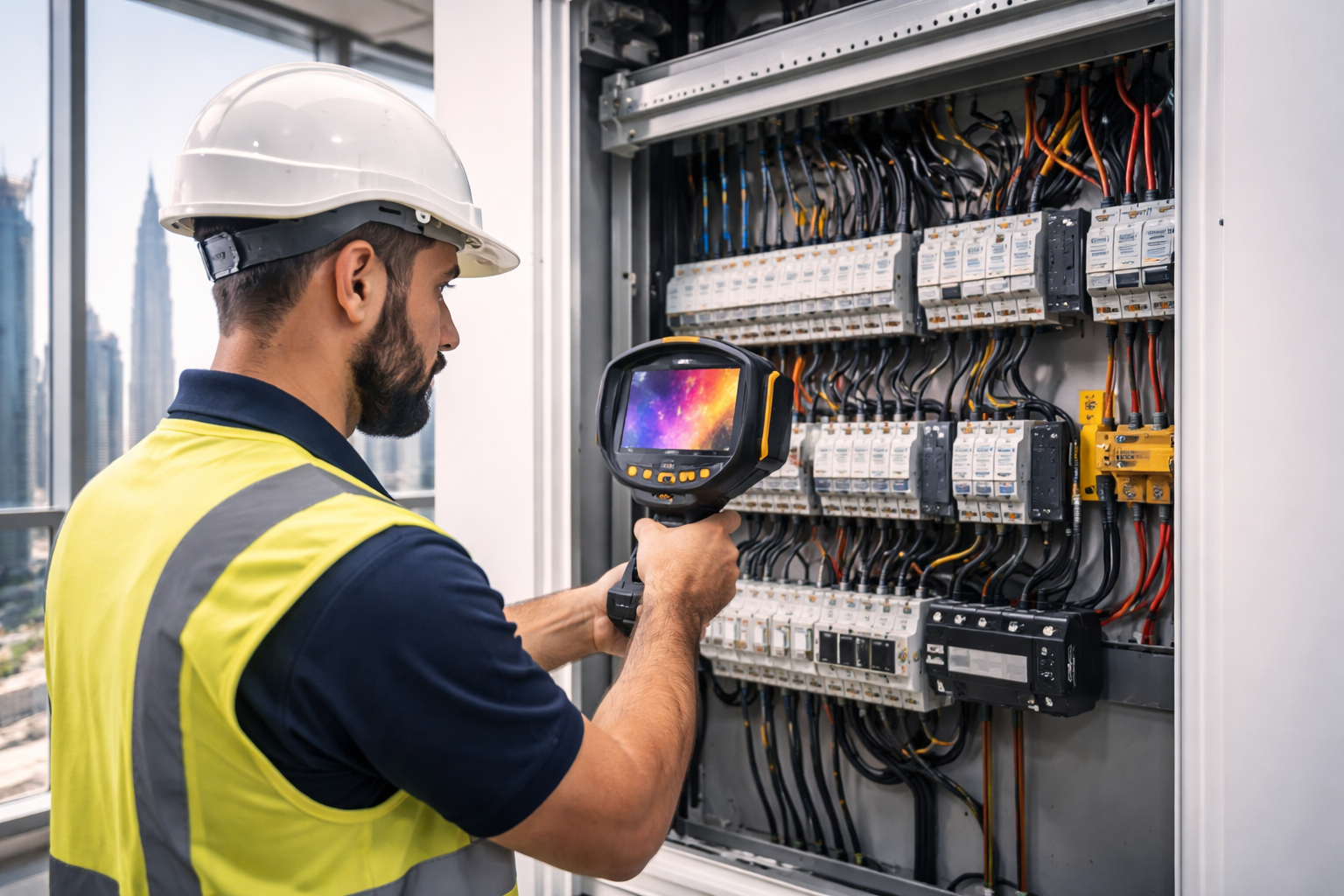
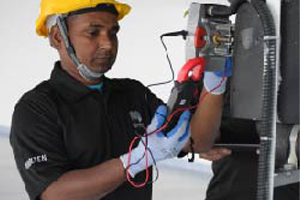
    Thermography is the process of using infrared cameras to detect temperature variations on the surface of equipment and systems. Since excessive heat is often the first sign of an underlying issue, thermal imaging allows engineers to identify faults that are invisible to the naked eye—without shutting down operations.

    1. Early Detection of Electrical Faults

    During testing and commissioning, thermography helps detect loose connections, overloaded circuits, phase imbalances, and faulty components in electrical panels, switchgear, transformers, and cable terminations.

    Heat anomalies typically indicate resistance or stress within the system. Identifying these issues before full-scale operation ensures reliability and significantly reduces the risk of breakdowns, short circuits, or fire hazards.

    2. Non-Invasive and Safe Inspection

    One of the biggest advantages of thermography is that it is completely non-contact. Equipment can be inspected while energized and under load, which provides real-time performance data without interrupting operations.

    This approach enhances safety for technicians and avoids the downtime that traditional inspection methods may require.

    3. Improved System Reliability

    Commissioning is not just about verifying that systems are installed—it’s about confirming they perform optimally under actual working conditions. Thermal imaging validates the integrity of electrical connections and load distribution, ensuring the system is stable and balanced before project handover.

    By addressing thermal irregularities early, organizations can avoid premature equipment failure and ensure long-term operational reliability.

    4. Cost Savings Through Preventive Action

    Unidentified heat buildup can lead to insulation damage, equipment degradation, and unexpected shutdowns. Thermographic testing allows teams to correct minor issues before they escalate into expensive repairs or replacements.

    Investing in thermal inspections during commissioning reduces future maintenance costs and protects critical assets.

    5. Comprehensive Documentation and Reporting

    Thermographic scans generate detailed visual reports with temperature readings and thermal patterns. These reports become part of the commissioning documentation, providing clients with clear evidence that systems were thoroughly tested and verified.

    This documentation is particularly valuable for compliance, audits, insurance requirements, and long-term maintenance planning.

    6. Faster Commissioning Process

    Because thermography allows quick scanning of large areas and multiple components, it accelerates the inspection process. Engineers can efficiently assess panels, busbars, terminations, and mechanical systems without dismantling equipment.

    This streamlined approach helps projects stay on schedule while maintaining high quality standards.


    Why Choose MOLTEN for Thermographic Testing?

    At MOLTEN, thermographic inspections are conducted by trained professionals using advanced infrared technology. Every inspection is backed by systematic analysis and clear reporting, ensuring clients receive accurate diagnostics and actionable insights.

    By integrating thermography into testing and commissioning, MOLTEN ensures safety, efficiency, and long-term performance—right from day one.

    Thermal imaging is not just an inspection method; it is a proactive strategy for delivering reliable, future-ready systems.
  • HVAC Commissioning: Non-Negotiable for Every High-Performance Building

    HVAC Commissioning: Non-Negotiable for Every High-Performance Building

    In today’s fast-evolving built environment, installing an HVAC system is only half the job. The real performance of a building begins when the system is tested, verified, and optimized. This is where HVAC commissioning becomes non-negotiable. Without proper HVAC commissioning, even the most advanced systems can underperform, waste energy, and compromise occupant comfort.

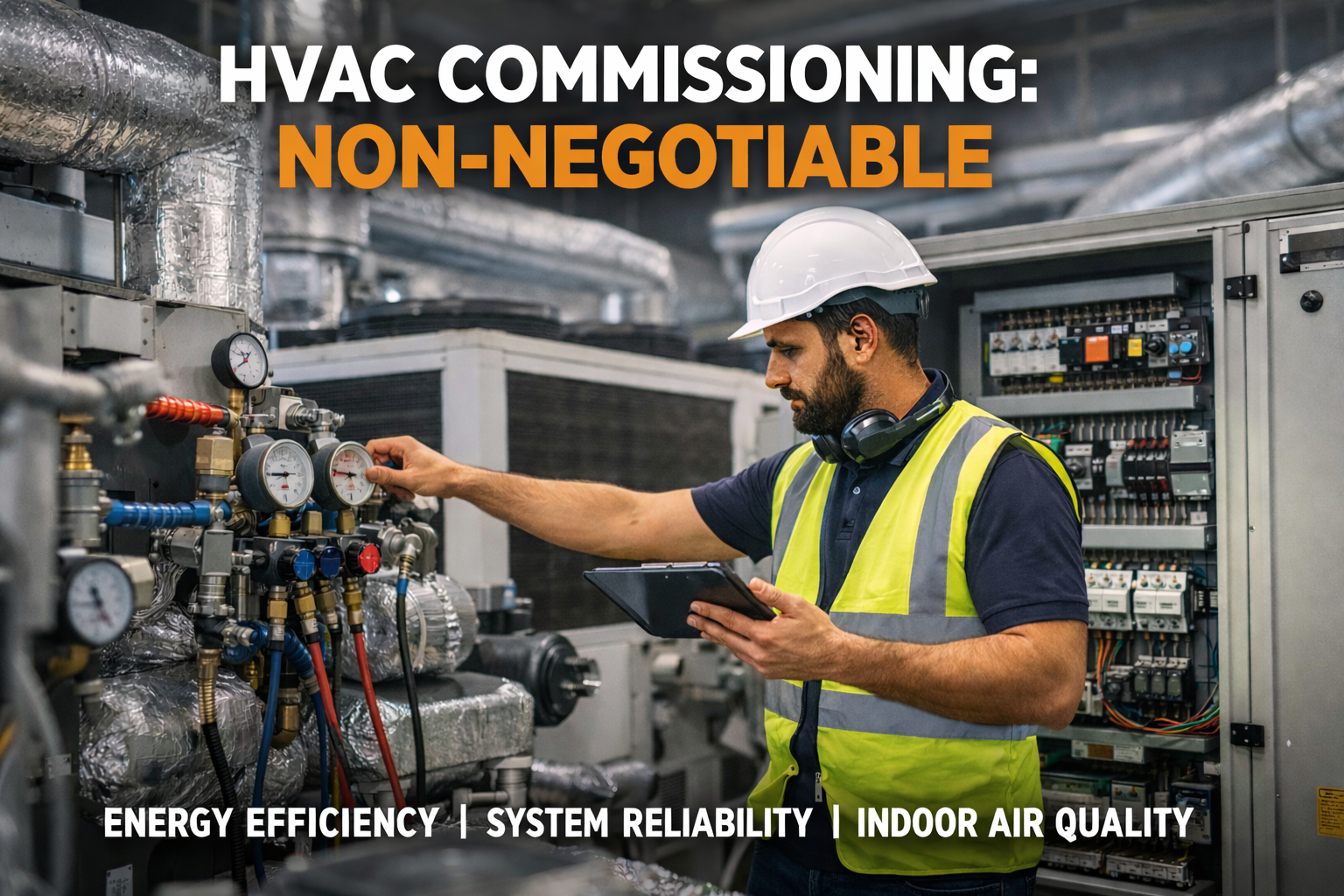
    HVAC commissioning is a structured process that ensures every component of the system—chillers, air handling units, ducting, controls, and sensors—operates exactly as designed. It validates that the HVAC system meets project requirements, energy targets, and indoor air quality standards. For commercial, industrial, and residential developments in the UAE, this process is critical due to the region’s extreme climate and high energy demands.

    One of the primary benefits of HVAC commissioning is system reliability. Uncommissioned systems often suffer from airflow imbalances, incorrect control sequences, and hidden installation errors. These issues may not be visible at handover but surface later as frequent breakdowns and costly repairs. Through professional HVAC testing and commissioning, potential failures are identified early, reducing downtime and extending equipment life.

    Another vital outcome is energy efficiency. Buildings in the UAE rely heavily on HVAC systems, making energy performance a top priority. Proper HVAC commissioning ensures that systems operate at optimal efficiency, preventing overcooling, short cycling, and unnecessary power consumption. Studies consistently show that commissioned buildings achieve up to 20–30% energy savings compared to non-commissioned ones. For developers and facility managers, this translates into lower operational costs and improved sustainability ratings.

    Indoor air quality is equally impacted. A poorly commissioned HVAC system can lead to uneven temperatures, stale air, and humidity issues—directly affecting occupant health and productivity. HVAC commissioning verifies airflow rates, filtration performance, and fresh air intake, ensuring a healthy and comfortable indoor environment.

    At MOLTEN, we view HVAC commissioning not as an optional add-on, but as a core responsibility. As one of the best HVAC companies in the UAE, our commissioning approach combines technical precision with real-world performance validation. Every project undergoes detailed inspection, functional testing, and performance tuning, aligned with international standards and local regulations.

    In a competitive construction landscape, skipping HVAC commissioning may seem like a cost-saving measure. In reality, it creates long-term risks—higher energy bills, frequent maintenance, and dissatisfied occupants. Commissioning protects the investment made in HVAC infrastructure and guarantees that the system delivers what it promises.

    The message is simple: Install smart. Test thoroughly. Trust only what’s proven.
    Because when it comes to building performance, HVAC commissioning isn’t optional—it’s non-negotiable.

  • Successful Completion of Live Chilled Water Valve Replacement in Basement Pump Room

    Successful Completion of Live Chilled Water Valve Replacement in Basement Pump Room

    Project Type: Chilled Water System Modification

    Location: Basement Pump Room (Live Building)

    Nature of Work: Critical HVAC Modification without System Shutdown

    Project Overview

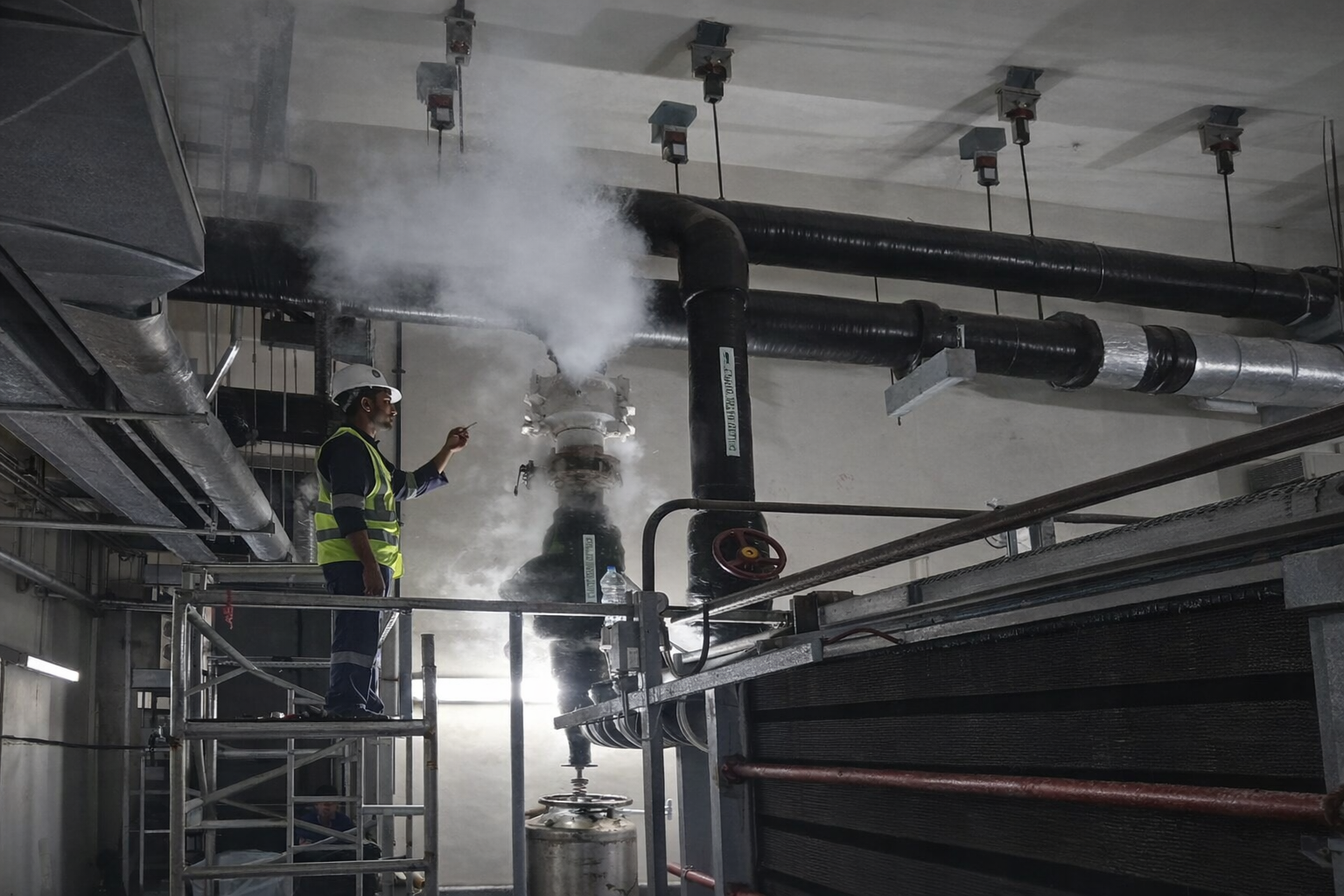
    MOLTEN recently completed a high-risk chilled water system modification project in a live building’s basement pump room. The scope involved replacing existing chilled water valves on the main line—without draining the system and without interrupting the building’s ongoing operations.

    Executing work of this nature inside a live HVAC system requires deep engineering expertise, precise planning, and disciplined execution. Any mistake could lead to water leakage, system imbalance, downtime, or disruption to occupants. This project stands as a strong example of MOLTEN’s capability in handling complex HVAC works under operational constraints.

    Key Challenges of the Project

    Working inside a basement pump room adds multiple layers of difficulty:

    • Live chilled water system with no shutdown window
    • High-pressure pipelines carrying chilled water
    • Limited working space and access restrictions
    • Zero tolerance for leakage or operational disturbance
    • Strict time constraints to minimize risk exposure

    The biggest challenge was to replace the valves without draining the chilled water line, ensuring uninterrupted cooling for the building at all times.

    Engineering-Driven Approach

    To manage the risks effectively, the project was executed using a methodical, calculation-based engineering strategy, rather than conventional trial-and-error methods.

    1. Detailed Engineering Assessment

    • Evaluation of existing chilled water flow conditions
    • Pressure and pipe size verification
    • Valve isolation strategy planning
    • Risk analysis for live system intervention

    2. Controlled Work Execution

    • Careful removal of existing insulation around the work area
    • Precision cutting and preparation of the pipeline
    • Valve replacement executed with controlled isolation techniques
    • Continuous monitoring to ensure no impact on system operation

    3. Skilled Workforce & Supervision

    • Experienced HVAC engineers and technicians deployed
    • Strict supervision throughout the activity
    • Step-by-step execution as per approved method statement

    Scope of Work Executed

    The project scope included:

    • Removal of existing chilled water line insulation
    • Safe dismantling of old chilled water valves
    • Installation of new chilled water valves on the main line
    • High-accuracy alignment and secure valve connections
    • Re-insulation of the modified pipeline sections
    • System verification to ensure:
      • No leakage
      • Stable flow
      • Normal operation restored immediately

    All activities were completed without draining the chilled water system and without affecting the live building operations.

    Safety, Accuracy & Risk Control

    This project demanded absolute precision. MOLTEN followed strict safety and quality protocols:

    • Zero-leak tolerance
    • Continuous system observation during execution
    • Controlled working sequences
    • Immediate contingency readiness

    Such works are only possible with strong engineering calculations, skilled manpower, and disciplined execution, all of which were successfully demonstrated during this project.

    Project Outcome

    • ✅ Chilled water valves replaced successfully
    • ✅ No system shutdown required
    • ✅ No impact on building occupants
    • ✅ No leakage or operational disturbance
    • ✅ Work completed within the planned timeframe

    This project reinforced MOLTEN’s reputation for handling critical HVAC works in live environments, especially in basement pump rooms and high-risk zones.

    Why Clients Choose MOLTEN for Live HVAC Projects

    • Engineering-first approach, not shortcuts
    • Proven experience in live chilled water systems
    • Expertise in risk-critical HVAC modifications
    • Focus on safety, accuracy, and reliability
    • Ability to execute complex works without operational disruption

    Looking for Similar HVAC Works?

    If you are planning:

    • Chilled water valve replacement in live systems
    • Basement pump room HVAC modifications
    • HVAC works without shutdown or drainage
    • High-risk chilled water pipeline interventions

    MOLTEN is equipped to deliver engineered, safe, and reliable solutions.

  • What Makes a Perfect HVAC Design?

    What Makes a Perfect HVAC Design?

    In commercial buildings, HVAC is not just about cooling or heating—it is about comfort, efficiency, compliance, and long-term operational reliability. A perfect HVAC design balances all these elements while aligning with the building’s function and local regulations. In regions like the UAE, where climate demands are extreme, HVAC system design in UAE requires an even higher level of precision and expertise.

    1. Clear Understanding of Building Requirements

    Every successful HVAC design starts with understanding the building’s purpose. Offices, hospitals, malls, data centers, and hotels all have different occupancy patterns, heat loads, ventilation needs, and indoor air quality requirements. A well-designed commercial HVAC system is customized—not generic—ensuring optimal comfort without energy wastage.

    2. Accurate Load Calculations

    One of the most critical aspects of HVAC system design UAE projects is precise heat load calculation. Oversized systems lead to higher capital costs, inefficient operation, and frequent breakdowns, while undersized systems fail to meet comfort expectations. Proper load analysis considers occupancy, equipment heat gains, lighting, building orientation, insulation, and local weather conditions.

    3. Energy Efficiency and Sustainability

    With rising energy costs and stricter regulations, energy efficiency is no longer optional. A perfect HVAC design integrates high-efficiency equipment, zoning strategies, variable flow systems, and smart controls. Many businesses choose the best HVAC company in UAE to ensure their systems meet energy codes while reducing long-term operational expenses and carbon footprint.

    4. Compliance with UAE Standards

    Commercial HVAC system design in UAE must comply with local authorities such as Dubai Municipality, Abu Dhabi regulations, and international standards like ASHRAE. A professionally designed system ensures smooth approvals, safe operation, and long-term compliance—avoiding costly redesigns or delays during project execution.

    5. Maintainability and Future Scalability

    An often-overlooked factor in HVAC design is ease of maintenance. Proper equipment placement, access for servicing, and clear system documentation improve lifecycle performance. Additionally, a perfect HVAC design allows scalability—so future expansions or layout changes do not require complete system overhauls.

    6. Integration with Building Design

    HVAC should work in harmony with architectural, electrical, and fire-fighting systems. Coordinated design ensures efficient duct routing, optimal plant room layouts, and minimal clashes during installation—saving both time and cost.

    Conclusion

    A perfect HVAC design is the result of thoughtful planning, technical expertise, and local market understanding. For commercial projects, partnering with the best HVAC company in UAE ensures systems that deliver comfort, efficiency, compliance, and reliability—today and for years to come.


  • 5 Crucial HVAC Commissioning Tests for Reliable Commercial HVAC Performance

    5 Crucial HVAC Commissioning Tests for Reliable Commercial HVAC Performance

    In commercial buildings, HVAC systems are expected to perform flawlessly—delivering comfort, efficiency, and reliability from day one. However, even the best-designed HVAC system can underperform if it is not properly commissioned.

    HVAC commissioning is the final and most critical phase before system handover. It ensures that every component operates as intended, complies with design specifications, and meets local regulatory standards.

    Here are the five crucial HVAC commissioning tests that ensure reliable performance in commercial buildings.


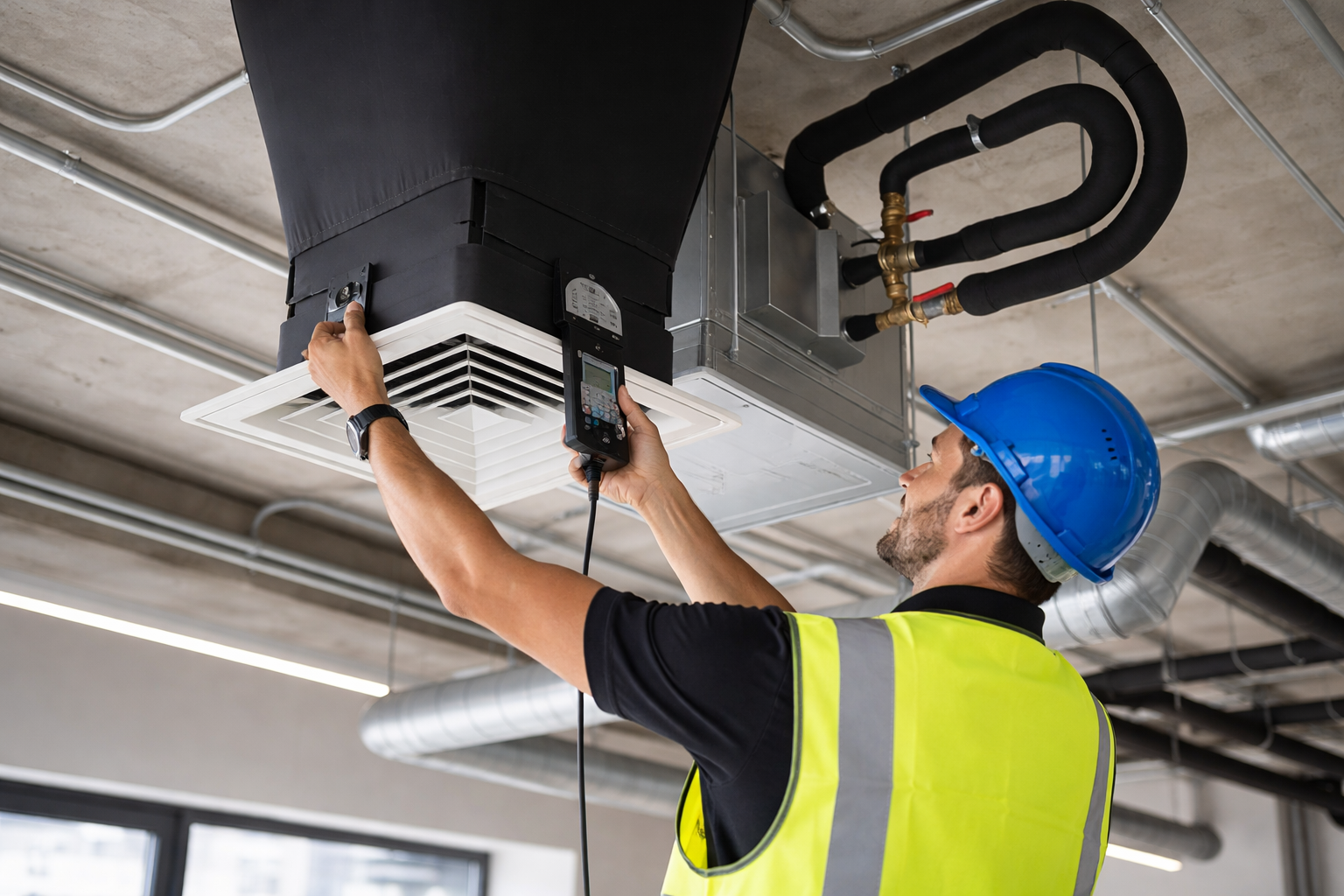
    1. Airflow Measurement & Balancing Test

    Airflow balancing verifies that the designed air quantities are delivered to every occupied space.

    This test involves:

    • Measuring supply, return, and exhaust air volumes
    • Balancing air distribution across zones
    • Ensuring correct diffuser performance

    Proper airflow balancing prevents hot and cold spots, reduces occupant complaints, and ensures consistent comfort throughout the building. It is especially critical in offices, malls, hospitals, and hotels.

    2. Chilled Water / Refrigerant Flow Testing

    For chilled water and VRF systems, correct flow rates are essential for system efficiency.

    This commissioning test checks:

    • Chilled water flow rates across AHUs and FCUs
    • Pump performance and differential pressure
    • Correct refrigerant charge and circulation

    Incorrect flow can lead to poor cooling, excessive energy consumption, and premature equipment failure. Proper testing ensures optimal heat transfer and stable system operation.


    3. Controls & Automation System Testing

    Modern commercial HVAC systems rely heavily on automation and control logic.

    This test validates:

    • Thermostat and sensor calibration
    • BMS integration and communication
    • Sequence of operations (start-up, shutdown, alarms)
    • Occupancy-based and time-based controls

    Controls testing ensures that the HVAC system operates intelligently—optimizing energy use while maintaining occupant comfort.


    4. Indoor Air Quality (IAQ) & Ventilation Testing

    Indoor air quality is no longer optional—it is a key requirement in commercial buildings.

    IAQ commissioning includes:

    • Fresh air volume verification
    • CO₂ level checks
    • Filtration performance testing
    • Humidity control validation

    This test is especially important in regions with high humidity (India) or dusty environments (UAE). Proper ventilation testing ensures healthier indoor spaces and regulatory compliance.


    5. Performance & Functional Testing Under Load Conditions

    The final commissioning step is testing the system under real operating conditions.

    This involves:

    • Running the HVAC system at partial and full loads
    • Monitoring temperatures, pressures, and energy consumption
    • Checking noise and vibration levels
    • Verifying safety interlocks and emergency shutdowns

    Performance testing confirms that the system can handle actual building demand, not just theoretical conditions.


    Why HVAC Commissioning Matters

    A properly commissioned HVAC system delivers:

    • Improved energy efficiency
    • Lower operating and maintenance costs
    • Longer equipment life
    • Reduced breakdowns and complaints
    • Compliance with local and international standards

    In commercial projects across regions, commissioning is not just a technical requirement—it is a risk management and performance assurance process.


    Conclusion

    Reliable HVAC performance does not happen by chance. It is the result of thorough commissioning, precise testing, and expert execution. By conducting these five critical HVAC commissioning tests, building owners and facility managers can ensure long-term comfort, efficiency, and system reliability.

    For commercial projects, investing in professional HVAC commissioning is not an expense—it’s a guarantee of performance.


  • How Smart HVAC Design Saves Up to 30% Energy in Commercial Buildings

    How Smart HVAC Design Saves Up to 30% Energy in Commercial Buildings

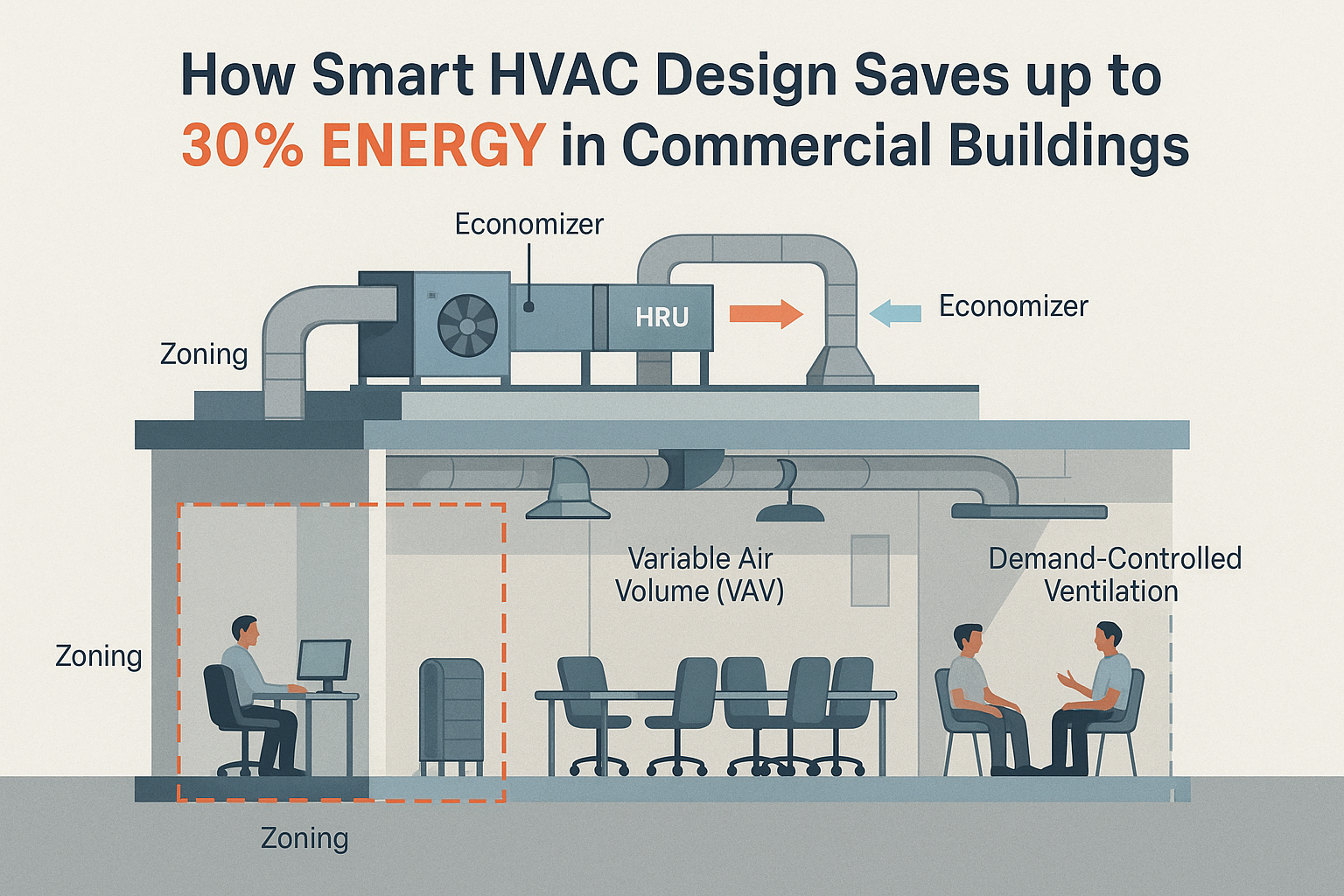
    In today’s commercial environments, energy efficiency is no longer optional — it’s a strategic priority. With rising energy costs and sustainability goals shaping modern infrastructure, organizations are turning to smart HVAC design to optimize performance while reducing operational expenses. A well-engineered HVAC system can save up to 30% energy in commercial buildings, creating comfortable indoor environments with lower carbon impact and long-term cost benefits.

    At MOLTEN, our engineering-first approach places smart planning, precise load calculations, and innovative technology integration at the core of every HVAC solution.

    1. Right-Sizing Through Accurate Load Calculations

    Many commercial buildings suffer from oversized or undersized HVAC systems. Oversized systems consume unnecessary energy and cause frequent cycling, while undersized units run continuously and underperform. Smart HVAC design begins with detailed heat load calculations considering factors such as:

    • Occupancy density
    • Lighting and equipment heat gain
    • Building envelope thermal properties
    • Orientation and climate conditions

    By matching system capacity to the real load demand, energy usage can be drastically reduced and equipment lifespan extended.

    2. Zoning and Variable Air Volume Systems

    Modern commercial spaces have varied occupancy and thermal needs throughout the day. Implementing zone-based controls and Variable Air Volume (VAV) systems ensures precise temperature regulation in different zones. Instead of conditioning the entire building uniformly, VAV systems minimize airflow and cooling where demand is low.

    This dynamic modulation significantly improves efficiency and reduces overall energy consumption.

    3. Demand-Controlled Ventilation

    Ventilating a space based on real-time occupancy is one of the most impactful energy-saving strategies. CO₂ and occupancy sensors allow HVAC systems to adjust outside air intake based on actual needs rather than fixed schedules.

    Demand-controlled ventilation optimizes indoor air quality while reducing the energy required to condition fresh air — particularly valuable in large offices, shopping malls, and commercial complexes.

    4. Heat Recovery and Economizer Systems

    Smart HVAC design incorporates heat recovery units (HRU) and economizers to reuse waste heat and take advantage of ambient air conditions.

    • HRUs transfer heat from exhaust air to fresh intake air
    • Economizers bring in cool outside air when weather permits

    These systems minimize compressor load, resulting in significant energy savings without compromising comfort.

    5. Automation, Analytics & Smart Controls

    Integrating Building Management Systems (BMS) and intelligent controls fine-tunes HVAC performance using real-time analytics. Smart sensors adjust temperature, airflow, and humidity automatically, based on building occupancy and weather patterns.

    By continuously monitoring system performance, predictive maintenance and proactive tuning further enhance efficiency and reliability.

    Delivering Sustainable Comfort With MOLTEN

    Energy-efficient HVAC design is not just about equipment — it’s about engineering insight, precision planning, and ongoing optimization. With deep domain expertise and a commitment to sustainable engineering, MOLTEN designs smart HVAC systems that reduce energy consumption, enhance indoor comfort, and extend equipment life.

    Whether you’re constructing a new commercial facility or upgrading an existing one, investing in expert HVAC design delivers measurable returns — up to 30% energy savings, lower operational costs, and a greener future.

  • The Importance of Indoor Air Pressure in HVAC Systems

    The Importance of Indoor Air Pressure in HVAC Systems

    When people think of HVAC, they usually imagine cooling, heating, or comfort. But beyond temperature control, one of the most critical—and often overlooked—factors in healthy buildings is indoor air pressure balance. The right pressure ensures that air flows in the right direction, protecting people, enhancing comfort, and improving safety.

    What is Indoor Air Pressure?

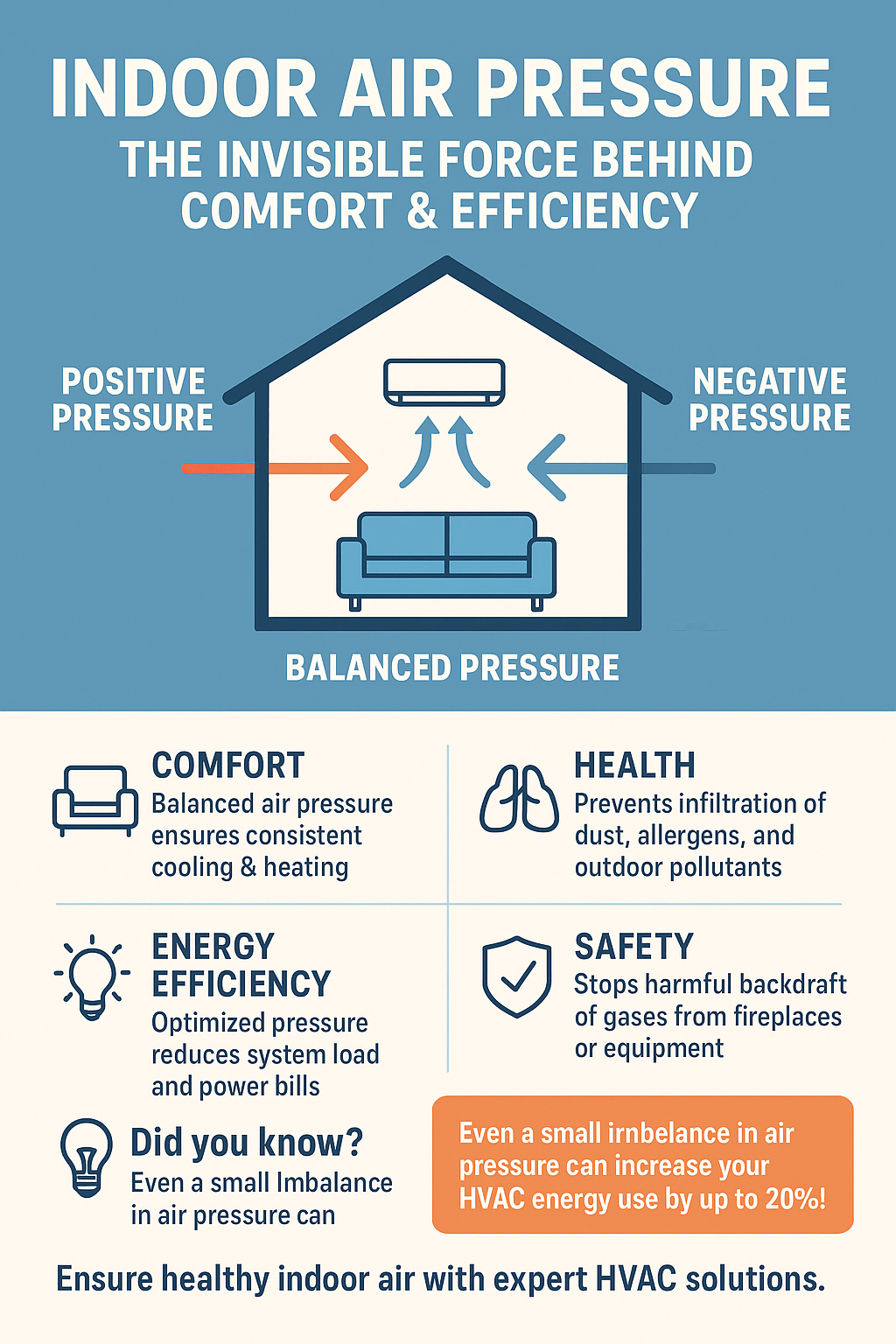
    Indoor air pressure is the result of balancing three components of an HVAC system: Treated Fresh Air (TFA), Extract Air, and Recirculated Supply Air.
    • When Supply Air > Extract Air, the space is under Positive Pressure.
    • When Extract Air > Supply Air, the space is under Negative Pressure.
    • When both are balanced, the space is in Neutral Pressure.

    This balance decides whether a room pushes air out, pulls air in, or stays stable.

    Positive Pressure

    Positive pressure means more air is supplied than exhausted. This forces clean air out of the space whenever doors or openings are accessed, preventing contaminants from entering.

    Applications:
    • Hospitals: Operating rooms, ICUs, clean rooms
    • Homes: Living rooms, bedrooms
    • Restaurants: Dining areas
    • Offices: Lobbies and workspaces

    Benefit: Protects occupants by keeping contaminants, dust, and odors out.

    Negative Pressure

    Negative pressure means more air is exhausted than supplied. This creates a suction effect, pulling surrounding air into the space. It is used to contain pollutants, odors, or infections within a defined area.

    Applications:
    • Hospitals: Isolation rooms
    • Homes: Kitchens and toilets
    • Restaurants: Kitchens
    • Industries: Paint booths, labs, and chemical areas

    Benefit: Prevents spread of odors, smoke, or infectious agents into cleaner areas.

    Neutral Pressure

    Some spaces don’t need positive or negative dominance. Neutral pressure is used in comfort-driven environments like classrooms, open-plan offices, or general retail areas, where stable air balance is sufficient.

    Everyday Examples


    • In Homes: Living rooms stay positive to remain fresh, while kitchens and toilets stay negative to stop odors and smoke from spreading.
    • In Restaurants: Dining halls are positive for guest comfort, kitchens are negative to keep cooking fumes contained.
    • In Hospitals: Operating theaters are positive to protect patients, while isolation wards are negative to contain infections.

    MOLTEN’s Commitment

    At MOLTEN, we recognize that air pressure is not just about engineering—it’s about Creating Healthy Environments. Our HVAC designs and commissioning services are built to ensure the correct pressure balance for every project, whether it’s a home, hospital, restaurant, or industrial site.

    By combining technical expertise, sustainable design, and global standards, we deliver environments that are safer, cleaner, and healthier—today and for the future.

  • The Importance of Indoor Air Pressure in HVAC Systems

    The Importance of Indoor Air Pressure in HVAC Systems

    When people think of HVAC, they usually imagine cooling, heating, or comfort. But beyond temperature control, one of the most critical—and often overlooked—factors in healthy buildings is indoor air pressure balance. The right pressure ensures that air flows in the right direction, protecting people, enhancing comfort, and improving safety.

    What is Indoor Air Pressure?

    Indoor air pressure is the result of balancing three components of an HVAC system: Treated Fresh Air (TFA), Extract Air, and Recirculated Supply Air.
    • When Supply Air > Extract Air, the space is under Positive Pressure.
    • When Extract Air > Supply Air, the space is under Negative Pressure.
    • When both are balanced, the space is in Neutral Pressure.

    This balance decides whether a room pushes air out, pulls air in, or stays stable.

    Positive Pressure

    Positive pressure means more air is supplied than exhausted. This forces clean air out of the space whenever doors or openings are accessed, preventing contaminants from entering.

    Applications:
    • Hospitals: Operating rooms, ICUs, clean rooms
    • Homes: Living rooms, bedrooms
    • Restaurants: Dining areas
    • Offices: Lobbies and workspaces

    Benefit: Protects occupants by keeping contaminants, dust, and odors out.

    Negative Pressure

    Negative pressure means more air is exhausted than supplied. This creates a suction effect, pulling surrounding air into the space. It is used to contain pollutants, odors, or infections within a defined area.

    Applications:
    • Hospitals: Isolation rooms
    • Homes: Kitchens and toilets
    • Restaurants: Kitchens
    • Industries: Paint booths, labs, and chemical areas

    Benefit: Prevents spread of odors, smoke, or infectious agents into cleaner areas.

    Neutral Pressure

    Some spaces don’t need positive or negative dominance. Neutral pressure is used in comfort-driven environments like classrooms, open-plan offices, or general retail areas, where stable air balance is sufficient.

    Everyday Examples
    • In Homes: Living rooms stay positive to remain fresh, while kitchens and toilets stay negative to stop odors and smoke from spreading.
    • In Restaurants: Dining halls are positive for guest comfort, kitchens are negative to keep cooking fumes contained.
    • In Hospitals: Operating theaters are positive to protect patients, while isolation wards are negative to contain infections.

    MOLTEN’s Commitment

    At MOLTEN, we recognize that air pressure is not just about engineering—it’s about Creating Healthy Environments. Our HVAC designs and commissioning services are built to ensure the correct pressure balance for every project, whether it’s a home, hospital, restaurant, or industrial site.

    By combining technical expertise, sustainable design, and global standards, we deliver environments that are safer, cleaner, and healthier—today and for the future.

  • Why Every Commercial Building Needs a Reliable HVAC System

    Why Every Commercial Building Needs a Reliable HVAC System

    Intro
    In today’s fast-paced business world, comfort and efficiency go hand in hand. A commercial HVAC system is no longer a luxury — it’s a backbone for productivity, customer experience, and operational sustainability. At MOLTEN, we’ve seen how the right HVAC solutions can transform workspaces into thriving environments.

    1. Comfort = Productivity


    Employees perform better in comfortable climates. Studies show that workplace temperature directly affects concentration, accuracy, and morale. A well-designed HVAC system ensures consistency, avoiding hot spots or sudden chills that disrupt workflow.

    2. Energy Efficiency Matters

    Modern HVAC systems are designed to use less energy while delivering higher output. Businesses save on energy bills, improve their green credentials, and contribute to a sustainable future. At MOLTEN, we specialize in tailoring energy-efficient solutions that reduce costs without compromising comfort.

    3. Indoor Air Quality & Health

    Air circulation, humidity control, and filtration are crucial in preventing airborne illnesses and allergies. For schools, offices, hospitals, and malls, cleaner air equals healthier occupants.

    4. Protecting Equipment & Infrastructure

    From IT servers to food storage facilities, temperature control safeguards sensitive assets. An unreliable HVAC system can mean costly damage or downtime.

    5. Custom Solutions with MOLTEN

    Every building is unique — from a boutique hotel to a high-rise office. That’s why MOLTEN provides customized HVAC planning, installation, and maintenance, ensuring that each client receives a solution designed for their exact needs.

    Conclusion

    A commercial HVAC system is an investment in comfort, efficiency, and future growth. With MOLTEN’s expertise, your business can create environments where people and performance thrive. Reach out to MOLTEN today to discuss how we can future proof your building with smarter HVAC Solutions.

  • Preparing Your HVAC System for Dubai’s winter: Essential Tips from MOLTEN

    Preparing Your HVAC System for Dubai’s winter: Essential Tips from MOLTEN

    As Dubai transitions from its scorching summer to the cooler winter months, it’s important to prepare your HVAC system for the change. While Dubai’s winters are mild compared to the harsh summer, nighttime temperatures can drop significantly, and your HVAC system plays a vital role in maintaining comfort. Proper preparation not only ensures energy efficiency but also extends the life of your unit, helping you avoid unexpected breakdowns during peak usage.
    In this guide, we’ll cover the key steps to get your HVAC system ready for the winter, so you can enjoy a comfortable, hassle-free season.

    Schedule a Professional HVAC Inspection

    One of the most effective ways to prepare your HVAC system for winter is to schedule a professional inspection. During Dubai’s summer, your air conditioning works overtime, potentially leading to wear and tear. A comprehensive inspection can identify any issues such as worn-out components, refrigerant or Water leaks, or electrical problems.
    At MOLTEN, we recommend annual maintenance before the winter season to ensure everything is functioning optimally. A well-maintained HVAC system not only keeps your home or business comfortable but also helps reduce energy bills by improving efficiency.

    Clean or Replace Air Filters

    Dust and sand accumulation are common problems in Dubai’s environment. Over time, HVAC filters become clogged, reducing airflow and making your system work harder than it should. This can lead to higher energy consumption and reduced indoor air quality. Before winter sets in, clean or replace your air filters to ensure your system runs efficiently.

    Why Clean Air Filters Matter:

    • Improved air circulation
    • Reduced strain on your HVAC system
    • Enhanced indoor air quality, especially important for homes with allergies or respiratory issues
    Check and Clean Ductwork

    Dubai’s dust-filled environment can affect your ductwork, leading to blockages and inefficiencies in air distribution. Ensuring your ducts are clean is an essential part of preparing your HVAC system for winter. Clogged ducts can reduce airflow, forcing your system to work harder to maintain a consistent temperature, which may result in higher energy bills.
    Regular duct cleaning can improve your HVAC system’s performance, reduce energy costs, and enhance indoor air quality. For commercial buildings, this step is even more critical due to the larger areas being heated or cooled.

    Test Your Thermostat

    As temperatures drop, you may want to switch from cooling to heating. Before winter begins, ensure that your thermostat is functioning correctly. If your thermostat is outdated or showing signs of malfunction, consider upgrading to a programmable or smart thermostat. These modern systems allow for better temperature control and can help you save on energy bills by automatically adjusting temperatures based on your schedule.

    Inspect and Clean HVAC Coils

    Both the evaporator and condenser coils in your HVAC system can collect dirt over time, especially after heavy summer use in Dubai. Dirty coils reduce the system’s efficiency, making it harder to maintain your desired temperature. Before winter, it’s important to clean the coils to improve heat exchange and maintain system efficiency.

    Seal Any Air Leaks

    Air leaks around windows, doors, and ductwork can cause heat loss during winter, forcing your HVAC system to work harder to maintain the indoor temperature. Sealing these leaks will improve your system’s efficiency, reduce energy consumption, and keep your space warm and comfortable.
    Use weather stripping and caulk around windows and doors, and ensure that ductwork is properly sealed.

    Set up a Preventive Maintenance Plan

    Regular maintenance is key to ensuring your HVAC system operates smoothly year-round. At MOLTEN, we offer preventive maintenance plans that are tailored to the unique challenges of Dubai’s climate. Our expert technicians can help you maintain your HVAC system, ensuring it runs efficiently during both the summer and winter seasons.
    Conclusion: Stay Ahead with Proper Winter HVAC Preparation

    While Dubai’s winters are mild, ensuring your HVAC system is ready for the cooler months is essential for maintaining comfort and energy efficiency. By scheduling a professional inspection, cleaning your air filters and ductwork, checking your thermostat, and sealing air leaks, you can prevent issues before they arise and ensure your HVAC system runs smoothly throughout the winter.

    At MOLTEN, we specialize in providing HVAC services designed for Dubai’s unique climate. Contact us today to schedule your winter HVAC maintenance and keep your system running efficiently year-round.

    Written By: Jithu K Joseph, MOLTEN